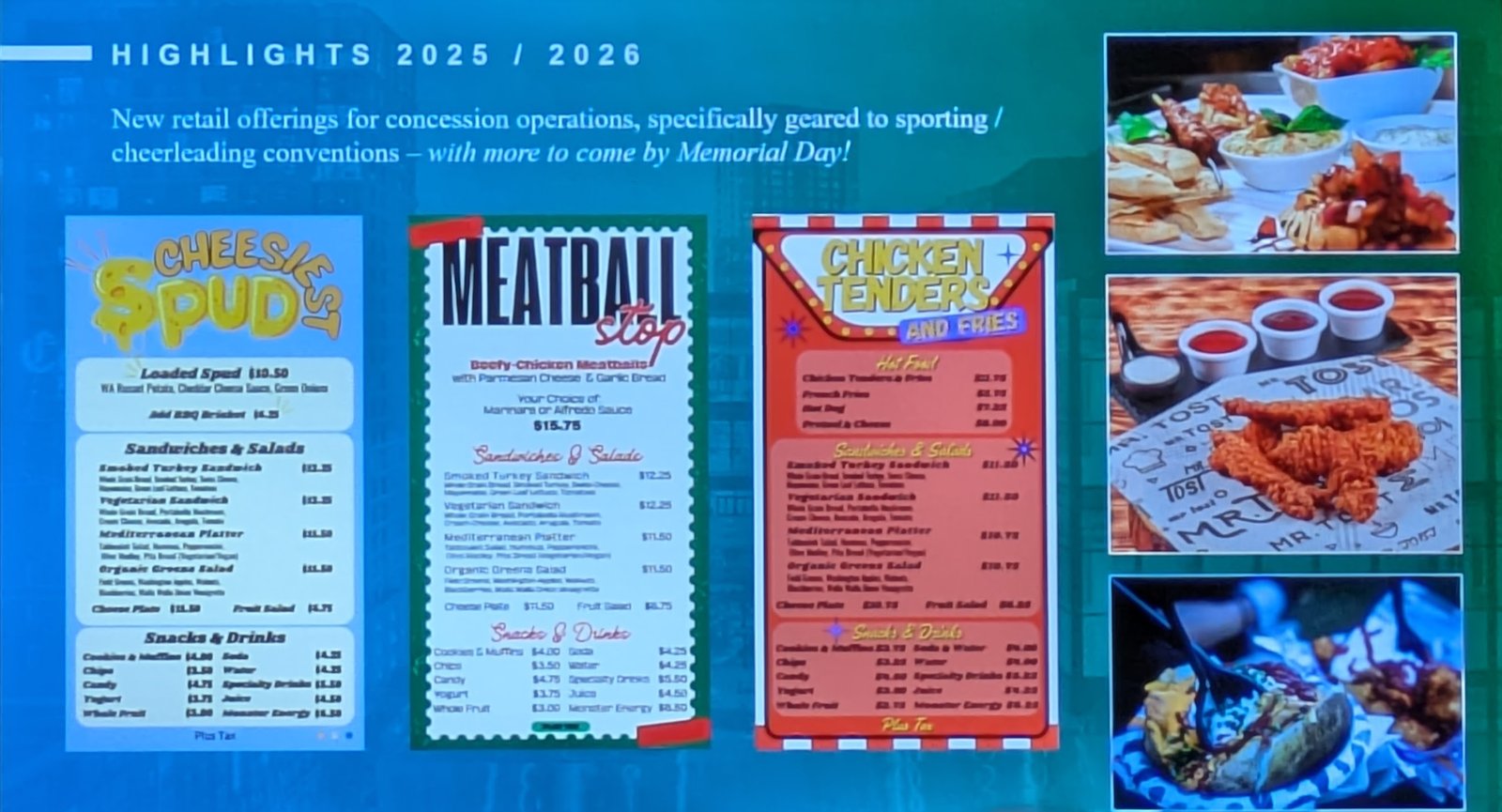
Aramark has been the food and beverage contractor at the Seattle Convention Center since the Arch building opened in 1988. The current contract started January 1, 2025 — five years, with two optional two-year extensions. If everything goes well, they could be there through 2033.
At the March 31 board meeting, Aramark general manager Keith Hedrick presented a financial update to the PFD board. Here's what I learned.
The numbers are big. Aramark did $38.3 million in food and beverage revenue in 2024 — a record year. Of that, the convention center got back $16.3 million, a 42.5% return. The year before was $25.1 million. The year before that, $14.5 million, still climbing out of the pandemic.
| Year | Revenue | Return to PFD | Margin |
|---|---|---|---|
| 2022 | $14.5M | $5.7M | 39.3% |
| 2023 | $25.1M | $9.8M | 30.0% |
| 2024 | $38.3M | $16.3M | 42.5% |
| 2025 | $37.0M | $15.3M | 41.3% |
| 2026 (budget) | $38.0M | $16.9M | 44.5% |
The anchor clients explain the scale. Microsoft has spent $67.9 million with Aramark at the convention center since 2012 — $17.3 million of that since the pandemic. Amazon's largest single event, in 2025, generated $3.8 million in food and beverage. When Microsoft runs a three-day event with 6,000 attendees a day and 300 with special dietary needs, Aramark brings in a dedicated dietary chef.
That's the business: large-scale corporate catering, optimized for high-value multi-day events.
Then Hedrick said something interesting.
He told the board that when the Summit opened, they tried to run both buildings with one team. It didn't work. They couldn't send staff across the street fast enough. When both buildings are stacked with events, you need two full operations — two executive teams, two kitchen crews, two front-of-house staffs.
"We've had to grow the team immensely and really jump in and divide and conquer within the buildings," he said. "We've learned that we've had to grow the team, and so we've increased our staff considerably."
He meant it as a story about adapting. And it is. But it's also an admission: the two buildings operate independently. Aramark tried one operation. That approach didn't work.
One contract covers both buildings. But the buildings don't work as one operation — the operator just told us so.
That raises a question: if the buildings already run as separate operations, with separate staffs, separate kitchens, and separate event schedules — why does one contract cover both?
This isn't an argument for firing Aramark. The numbers are good. The clients are happy. Microsoft keeps coming back. But a contract structure designed for one building in 1988 is now covering two buildings that the operator has acknowledged can't function as one.
The next time the contract comes up for review, that's worth remembering.
One more thing. Before the presentation started, UNITE HERE Local 8 members — the food service workers employed under the Aramark contract — distributed bags of peanut candy.
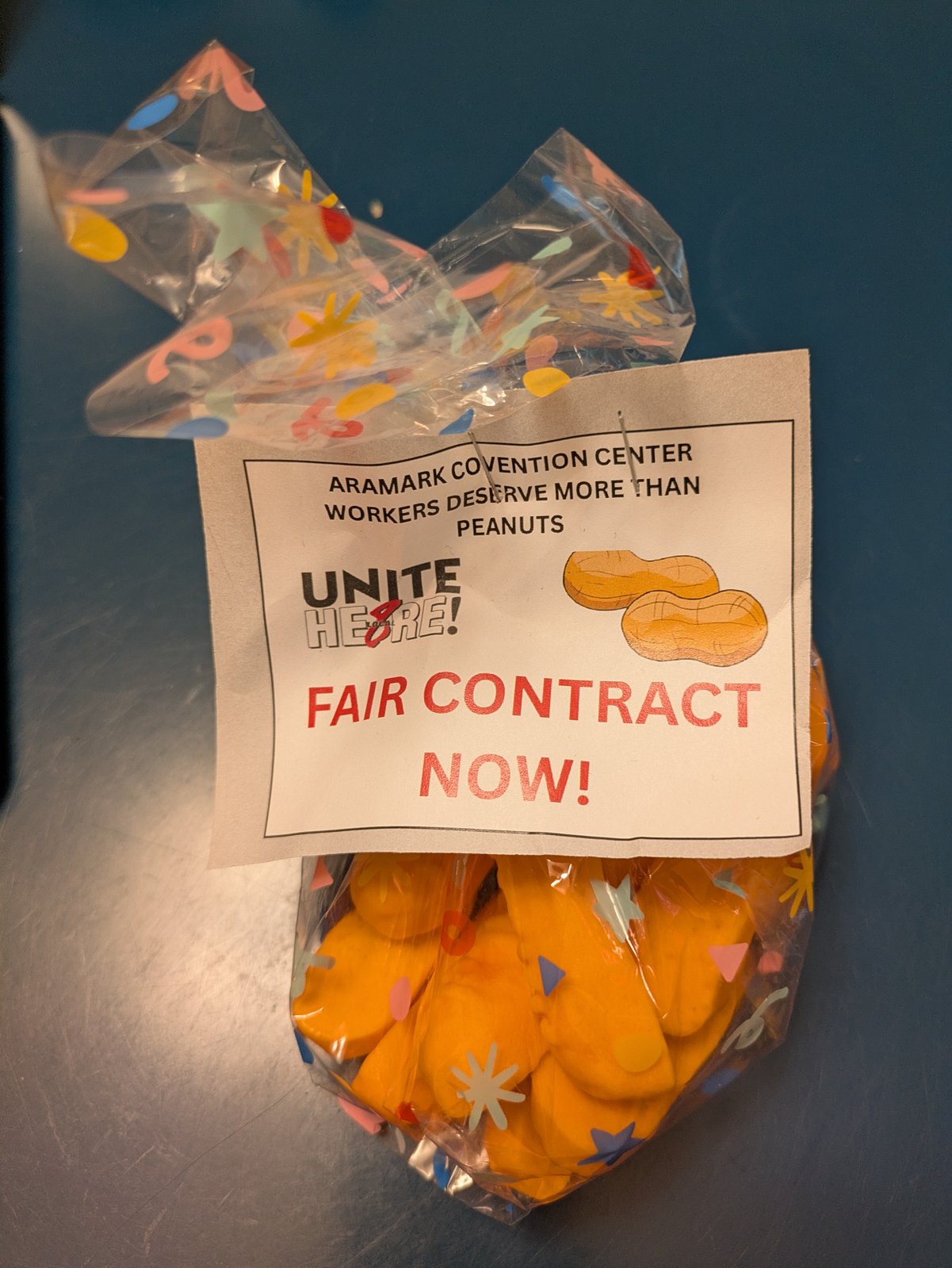
The board later went into closed session to discuss collective bargaining negotiations.
Make a Take / Share a Take▾
Before you pass it on — what's your take?
Sharing a Dispatch piece is taking a position. Take a moment to say what yours is — it travels further, and better, for it.
What do you want to say about this? What struck you — and who needs to hear it?
We don't track clicks. If Make a Take was useful, let us know →
Not sure what to say? Let your own AI help you draft it →
The prompt asks your AI to draft a note in your voice from what the article and its sources actually support — and to push back if you overclaim. Your conversation stays in your AI; nothing is sent to the Dispatch.