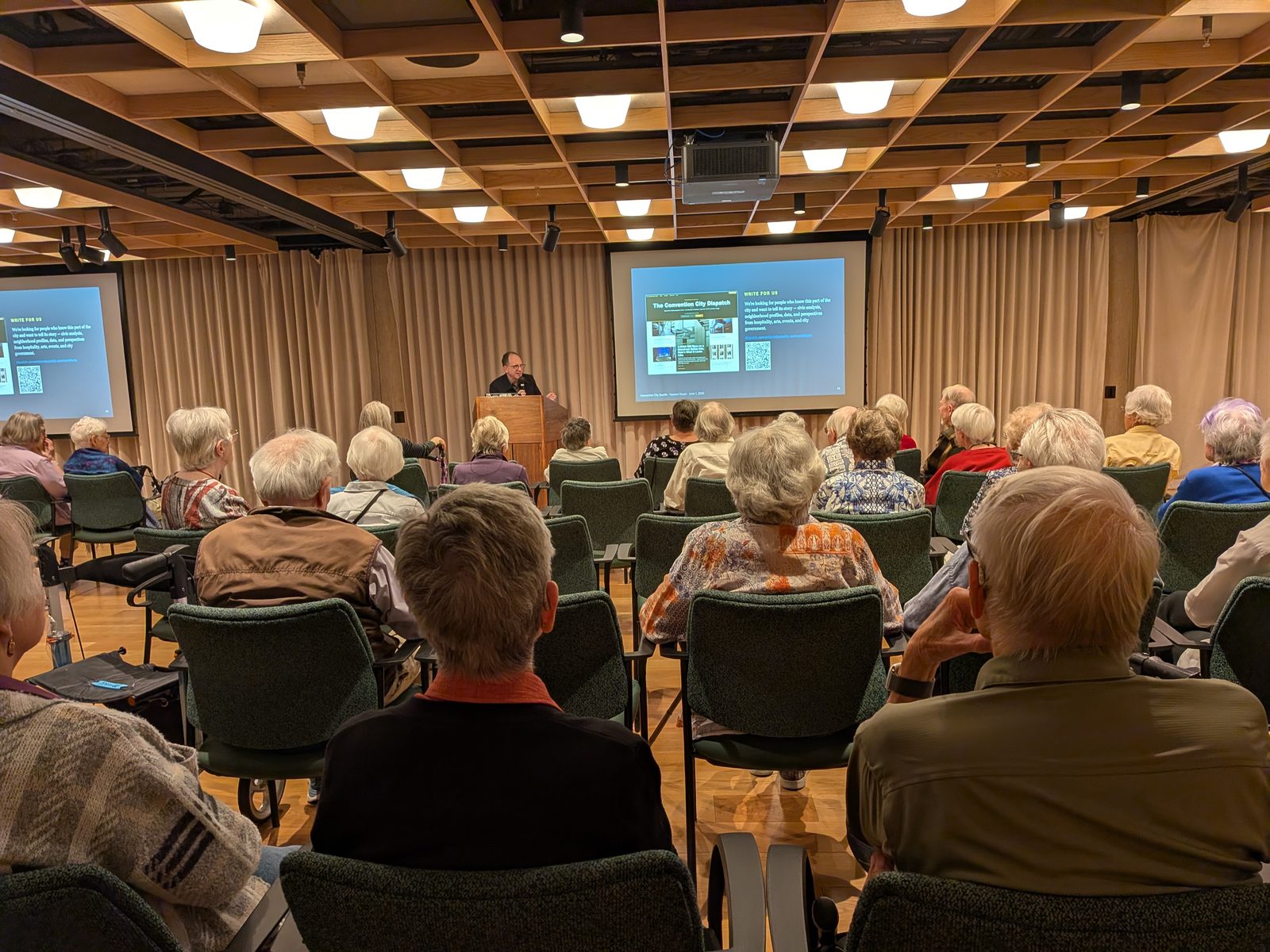
The Convention City Dispatch covers Seattle's geographic center — the intersection of Downtown, Capitol Hill, First Hill, and Denny Triangle — with the close attention that place deserves.
The Washington State Convention Center's Arch building anchors this stretch of the city. So does the light rail, the Pike/Pine corridor, and a dense cluster of hotels, hospitals, and civic institutions. The decisions made about this block affect the whole city.
We're trying to do something different: patient, place-based reporting that shows what's actually happening here, with enough context to make sense of it. Field observations. Civic analysis. Profiles of people doing consequential work in an underreported neighborhood.
The Dispatch is a companion publication to The Commons, a civic proposal for converting the Arch building into a year-round public commons operated by Seattle Center.
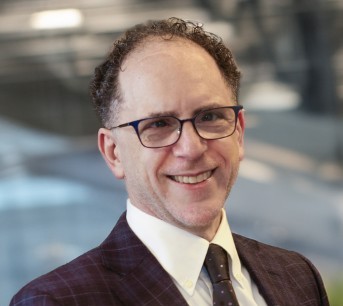
I worked at the Seattle Convention Center in 2023 as an on-call attendant and guest services lead. After leaving, I built Convention City Seattle — digital trail maps for visitors to the Summit.
In February 2026, a Seattle Times article on the convention center's finances sparked an idea. I wrote a LinkedIn post. Then I built a site making the case. The Dispatch followed: a place to publish ongoing reporting while the proposal moves through the civic process. In April, The Urbanist ran the case as an op-ed — the personal story behind the project, the captive food operation, and where Seattle stood against the other cities I'd scored. It also carries the correction I printed when the Center's booking records showed I'd called the Arch dark on the wrong numbers.
In July 2026 I joined the board of NSA Northwest — the regional chapter of the National Speakers Association, the 501(c)(6) professional association for people who speak for a living. As Director of Onboarding and Orientation, my part of it is helping new members find their footing in the profession.
I've spent most of my working life explaining complicated institutions — banks, insurers, capital markets — and the technology that runs them. In the early 2000s I was an editor at CMP Media, in New York and the Boston area, covering bank technology: interviewing executives, moderating panels, and writing for an audience of tens of thousands of financial-industry readers. I rose from associate to executive editor over six years.
For sixteen years after that I ran a one-person writing practice in Seattle, producing newsletters and reports for Tata Consultancy Services and others across banking, capital markets, insurance, and blockchain — more than 1,300 pages of it, often working directly with C-level executives. My specialty was explaining technical and financial concepts to a non-specialist business audience. More recently, I've built software and published my methodology for doing so under the banner Model Citizen Developer, and Convention City Seattle and the Dispatch came out of that effort.
On the education side: I studied Information and Decision Systems at Carnegie Mellon, earned an MBA in finance and accounting at Vanderbilt, spent a full year in Cornell's intensive Japanese program (FALCON), and later completed a master's in literature through the Harvard Extension School. It all gets used here — the finance training when reading a public agency's audited statements, the research rigor of the thesis work when running down a source. Much of what the Dispatch and the Commons do is translate those numbers into plain language.
I write outside this beat, too. LEON: A Life is a memoir I assembled of my father — a Merchant Marine officer who was torpedoed twice in the war and spent more than two decades at sea. My research on the talking dogs in Cervantes was published in the journal Humanities. And a project about the Faigin Atelier at Gage Academy of Art is forthcoming.
I own property adjacent to the convention center campus, and its estimated value has fallen by nearly a fifth. I worked at the Center in 2023, as an on-call attendant and guest services lead. Both could bear on how a reader weighs the reporting here.
I don't pretend to be neutral about the Commons proposal — I wrote it. This is advocacy journalism, in the tradition of a publication like The Urbanist: a point of view, openly held. What I can promise is that the reporting shows its sources and corrects its mistakes in public.