Read this with your own AI▾
This piece was built with the help of AI, from public records — here's how. Read it back with your AI: choose how you want to read it, copy the prompt, and interrogate the article yourself.
Your conversation stays in your AI — nothing is sent to or stored by the Dispatch. The built-in grounding line keeps the answer tied to the Dispatch's own reporting, and asks your AI to flag — not invent — anything that needs more.
New to C-STAR? Start with the Dispatch's October 9 piece, which traces what the convention center said about it from January 2025 to opening day.
C-STAR is the convention center's new street-front safety hub at 810 Pike. The convention center is run by a public agency, the Washington State Convention Center Public Facilities District, whose nine-member board is appointed by the Governor, the King County Executive and the Mayor of Seattle. The Seattle Times reported on C-STAR four days after it opened. Reading the story alongside the convention center's own February board presentation, I came away with more questions than answers.
Agreements. Krista Daniel, the center's vice president of event operations, told the Times the center has no formal agreement with the Seattle Police Department about how police use the space. The February presentation describes the space as designed for "precinct type work for SPD and other government agencies."
- Which other government agencies?
- Why is there no formal agreement? Are there informal arrangements, and if so, with which agencies?
- Can any public agency arrange, informally, to use C-STAR or other space in the convention center? Could the Seattle Public Library use C-STAR? Seattle Public Schools? Seattle Center? King County Metro? Could an agency be given a permanent home elsewhere on the campus, say in the building at 800 Pike, or in the meeting rooms on levels 2 and 3 at 705 Pike?
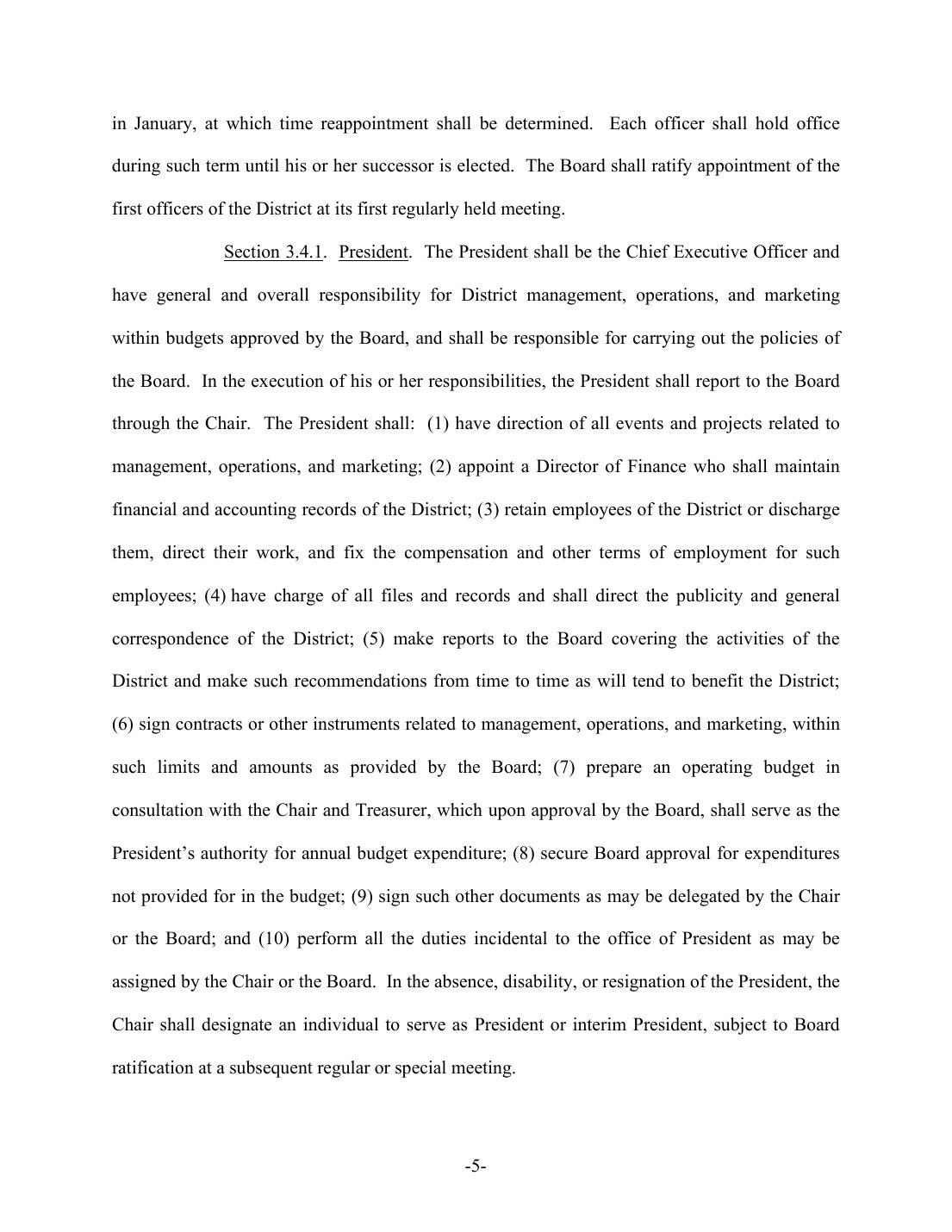
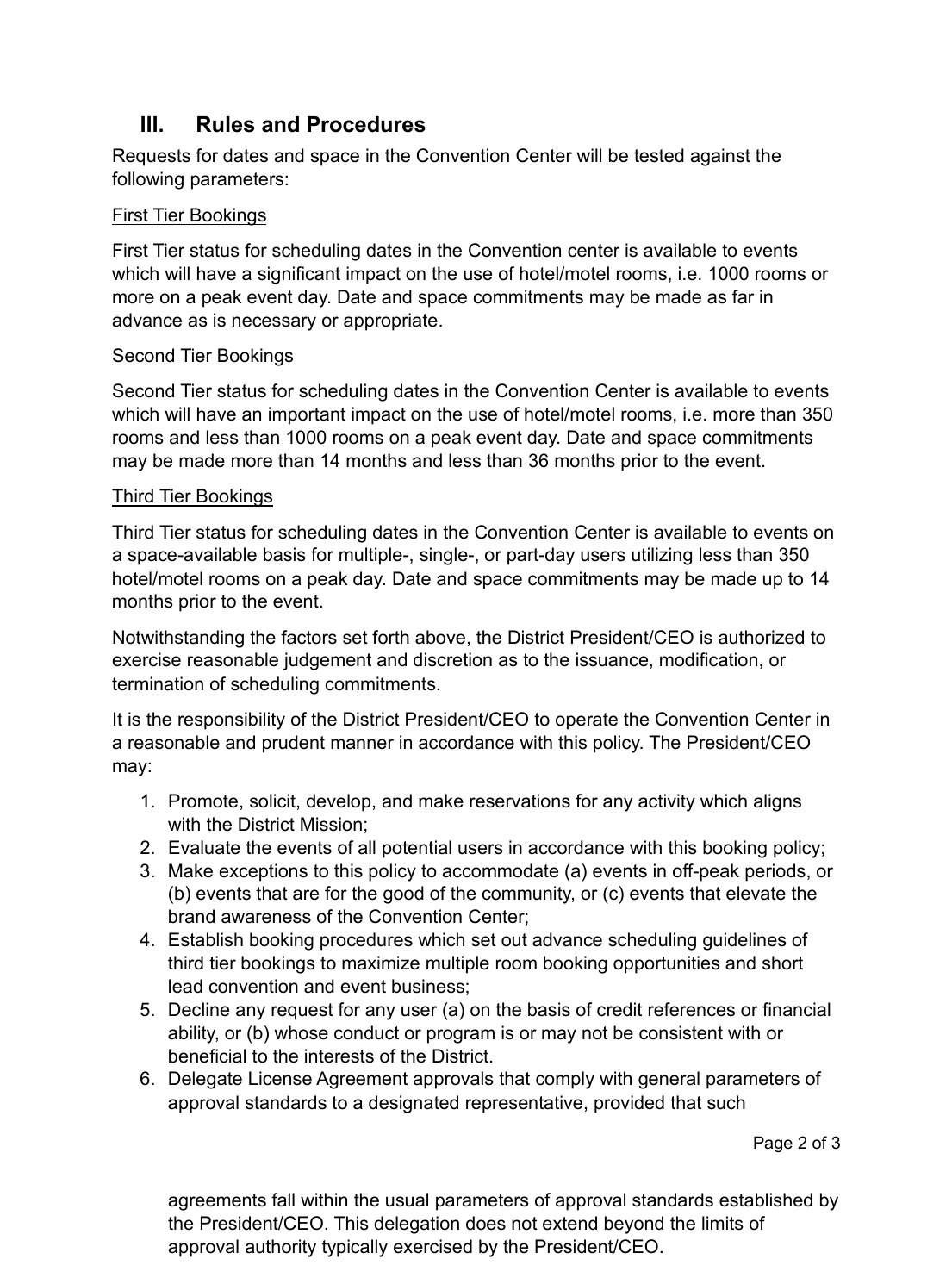
- Washington's Interlocal Cooperation Act gives public agencies a formal way to work together: an agreement that each agency's governing body approves "by ordinance, resolution or otherwise," filed with the county auditor or listed on the agency's website before it takes effect. The district's own rules give the CEO other tools. The bylaws let the CEO direct operations and sign instruments "within such limits and amounts as provided by the Board," and its booking policy lets the CEO make exceptions for, among other things, "events that are for the good of the community" and delegate license approvals to staff. Neither document says whether it covers an agency's ongoing use of space. Under which authority, if any, are SPD or other agencies, whether city, county, state or federal, using C-STAR? If it is the CEO's, who on staff approved it? And which route should it be?
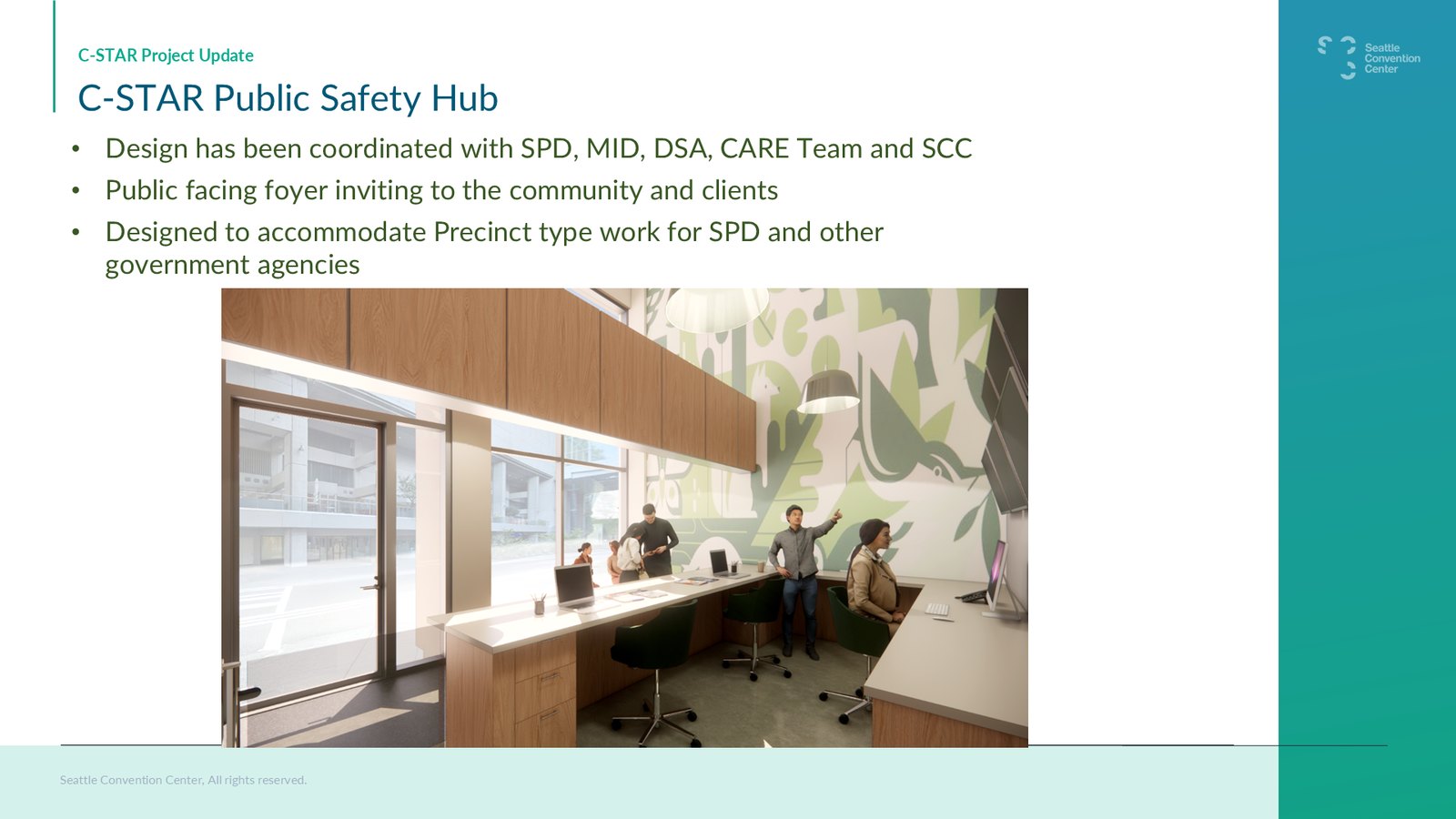 Slide from the convention center's February 24, 2026 board presentation, obtained by public records request.
Cameras. The center's communications director told the Times that SPD does not have access to the center's surveillance cameras. The February presentation's rendering of C-STAR's reception shows a wall of video monitors displaying camera feeds.
- Whose feeds are those, and who can see them?
- In a major emergency, would police or other agencies get access to the feeds? Who decides that an emergency has begun?
- What policy governs who can view the cameras and when? Will the district keep a record of which agencies view them, when and why, and will that record be public?
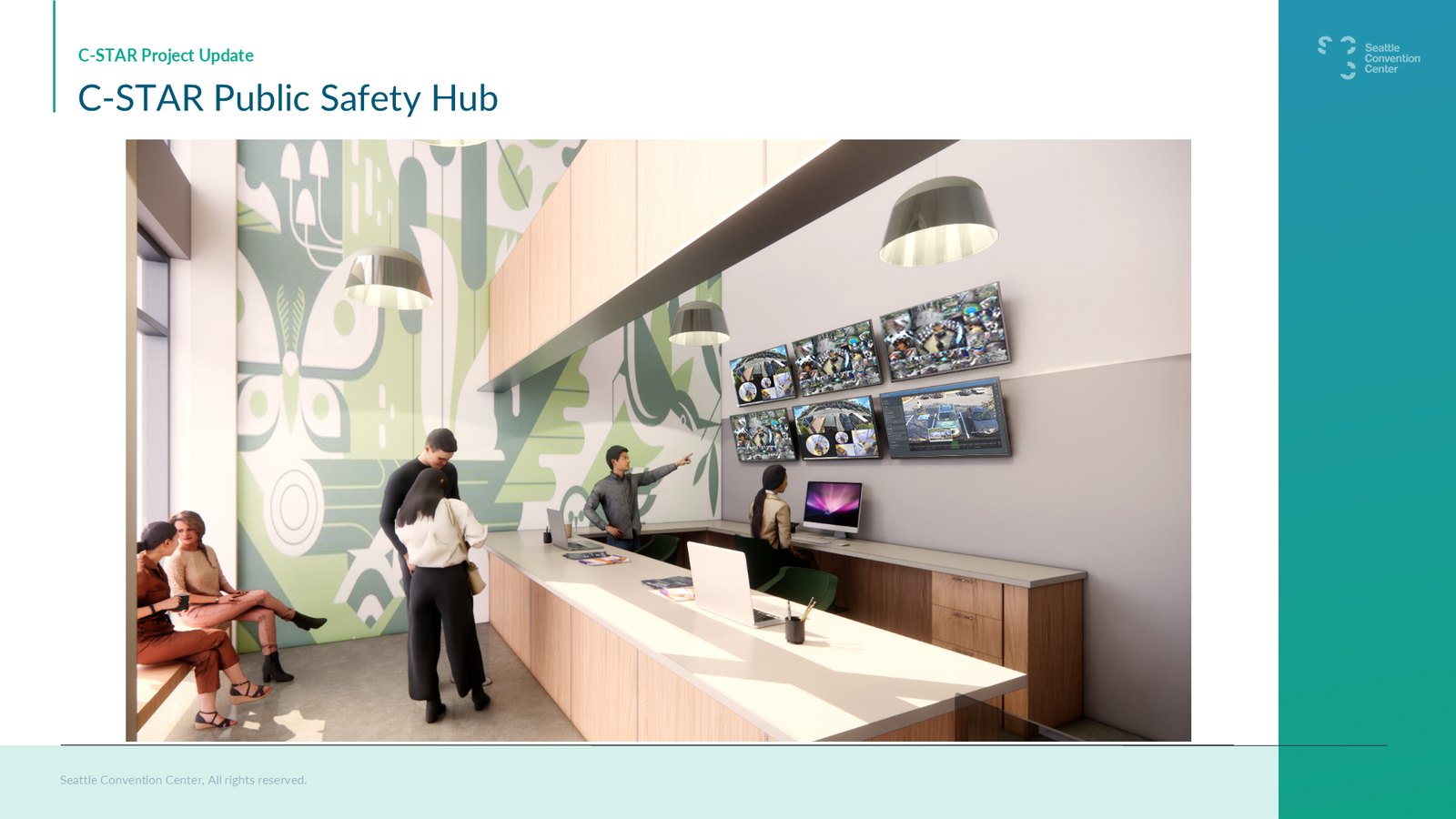 Design rendering from the convention center's February 24, 2026 board presentation, obtained by public records request. The finished space may differ.
Design and cost. The Times reports that SPD began helping design the space in June 2025, seven months before the board's January 27, 2026 vote authorizing its construction.
- How does a city agency help design a district space without a formal agreement? Was its role advisory?
- What, if anything, does SPD or the City provide in return for space built to its needs at the district's expense? C-STAR carries a $1 million line in the district's 2026 capital list. Compare the tasting room in the Arch: Aramark, the convention center's food-and-beverage contractor, put about $1 million of its own capital into that build-out, under its written contract (Resolution 2026-04), though the district may owe some of that back if the contract ends early. There, the private party paid for the space it wanted, and the terms are on paper. Here, the public district paid, and the center says there is no formal agreement.
- SPD Assistant Chief Robert Brown told KING 5 the department plans to stage officers in C-STAR during major incidents and may add nighttime bike patrols in the surrounding West Precinct, though "we're not there yet." Has any exchange for the space, such as more police presence nearby, been discussed with SPD or the City? If so, where is it recorded?
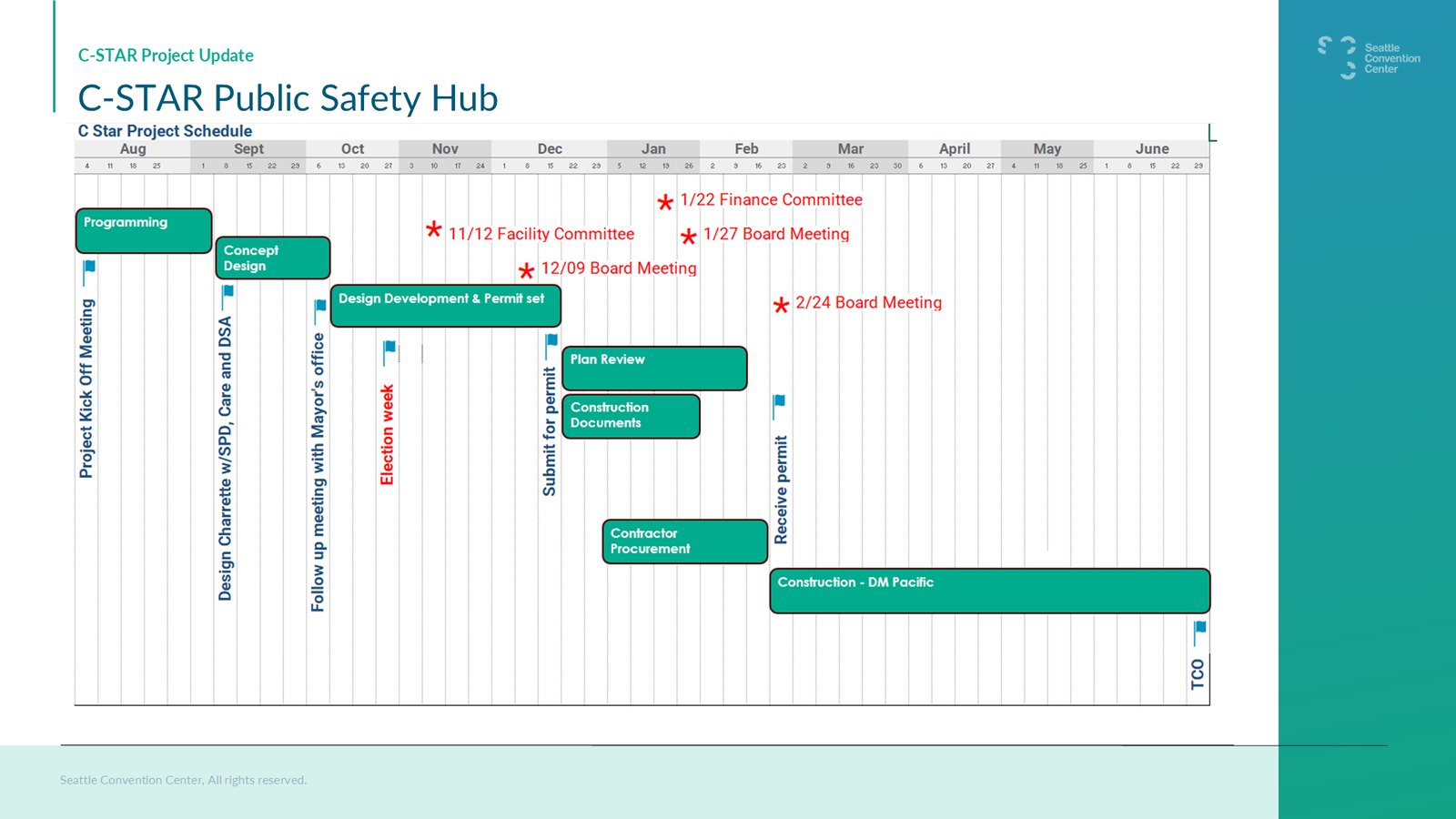 Project schedule, August 2025 to June 2026, from the convention center's February 24, 2026 board presentation, obtained by public records request.
Purpose. The convention center's stated uses are a "one-stop shop" where event planners discuss security plans with staff and visitors get help, a place for the City's CARE responders, Downtown Seattle Association ambassadors and police to coordinate, and a command center for City agencies in a major emergency.
- Event planners already meet with convention center staff. The convention center already has a staffed security desk at the Arch's staff entrance at Ninth and Pike, a block from C-STAR, and the Visit Seattle visitor desk at 705 Pike is open during events, with no posted hours. What was the security desk not providing that required a street-level facility? Is C-STAR meant to provide the visitor help that desk doesn't offer between events?
- Where do CARE, the ambassadors and police coordinate today, and what did that arrangement lack?
- The conference room in the design documents is 394 square feet. Is that large enough for an emergency command center? What scale of incident is it meant to support?
- What kinds of incidents is C-STAR planned for, and which agencies would use it in each?
- Jesse Anderson, the center's executive director of emergency management, told the Times they are "waiting to see how this evolves." What range of outcomes is the board planning for? Will it get regular reports on how C-STAR is used, and will those reports be public?
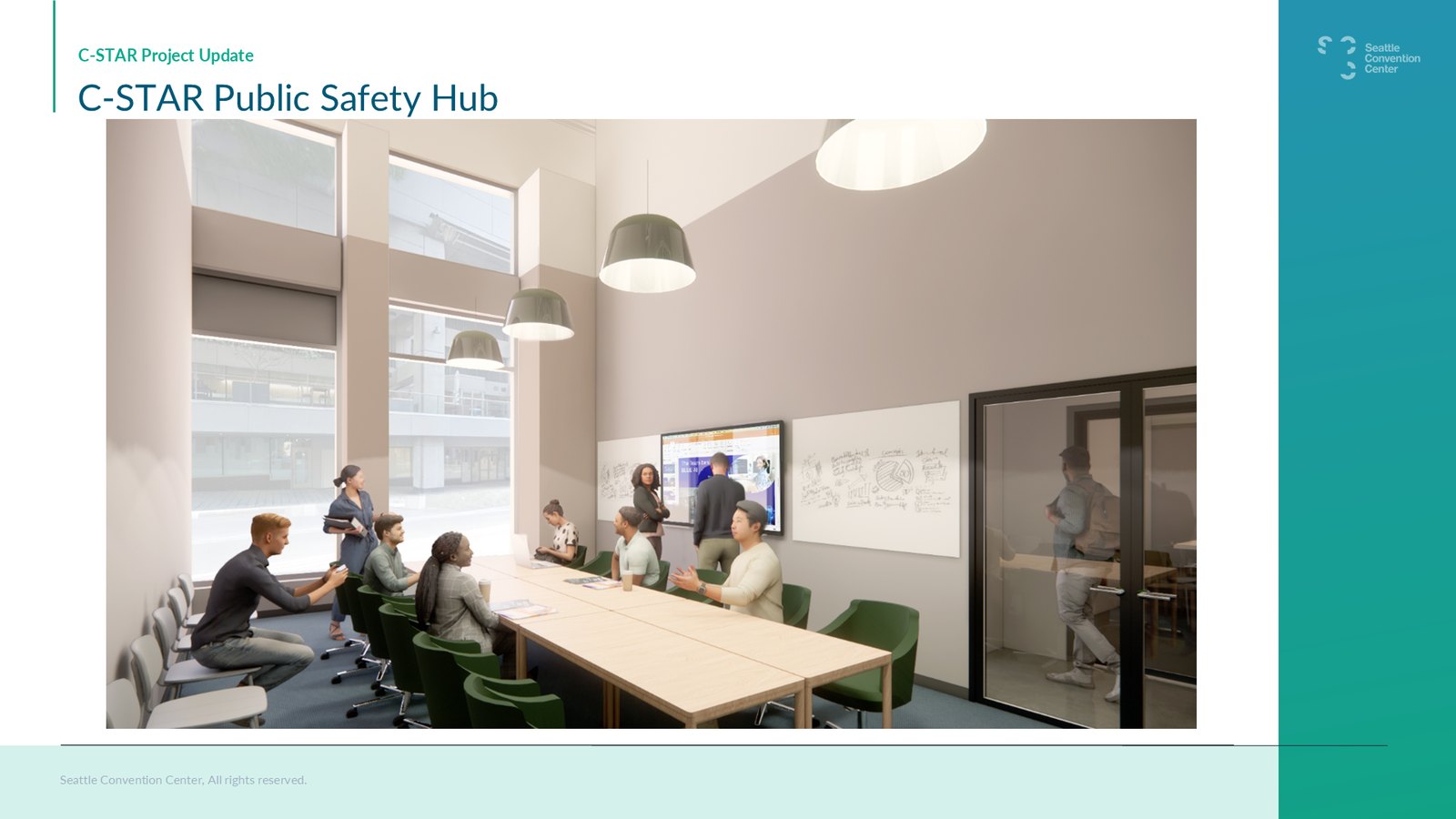 Design rendering from the convention center's February 24, 2026 board presentation, obtained by public records request. The finished space may differ.
The City. The Mayor appoints three of the board's nine members, and the City's police helped design C-STAR.
- Has the board asked the City, in writing, what role it sees for itself in C-STAR?
- If C-STAR brings more police patrols nearby, has the board considered how that sits with police coverage in other neighborhoods?
- How would C-STAR work alongside the City's own emergency operations center, and has the board seen a plan for that?
Restrooms. The Times reports that officers, ambassadors and CARE staff "will likely use the space as a place to escape the rain, do paperwork, eat or use one of its two all-gender restrooms." C-STAR also carries the Seattle Police Department's Safe Place designation, for places where people can wait safely for police. If someone who feels threatened stops in and needs a restroom, can they use one of C-STAR's, or are they sent across the street? What about someone who simply prefers an all-gender restroom? By my count, the restrooms open to the public on the first floors of the Arch and the Summit, two in each building, include none that are all-gender.
The best way to get answers to these questions would be for the board to direct the convention center's staff to answer them in public, on the record, and the three officials who appoint the board, each of whom still has a seat to fill, could make that an expectation of whoever they appoint.
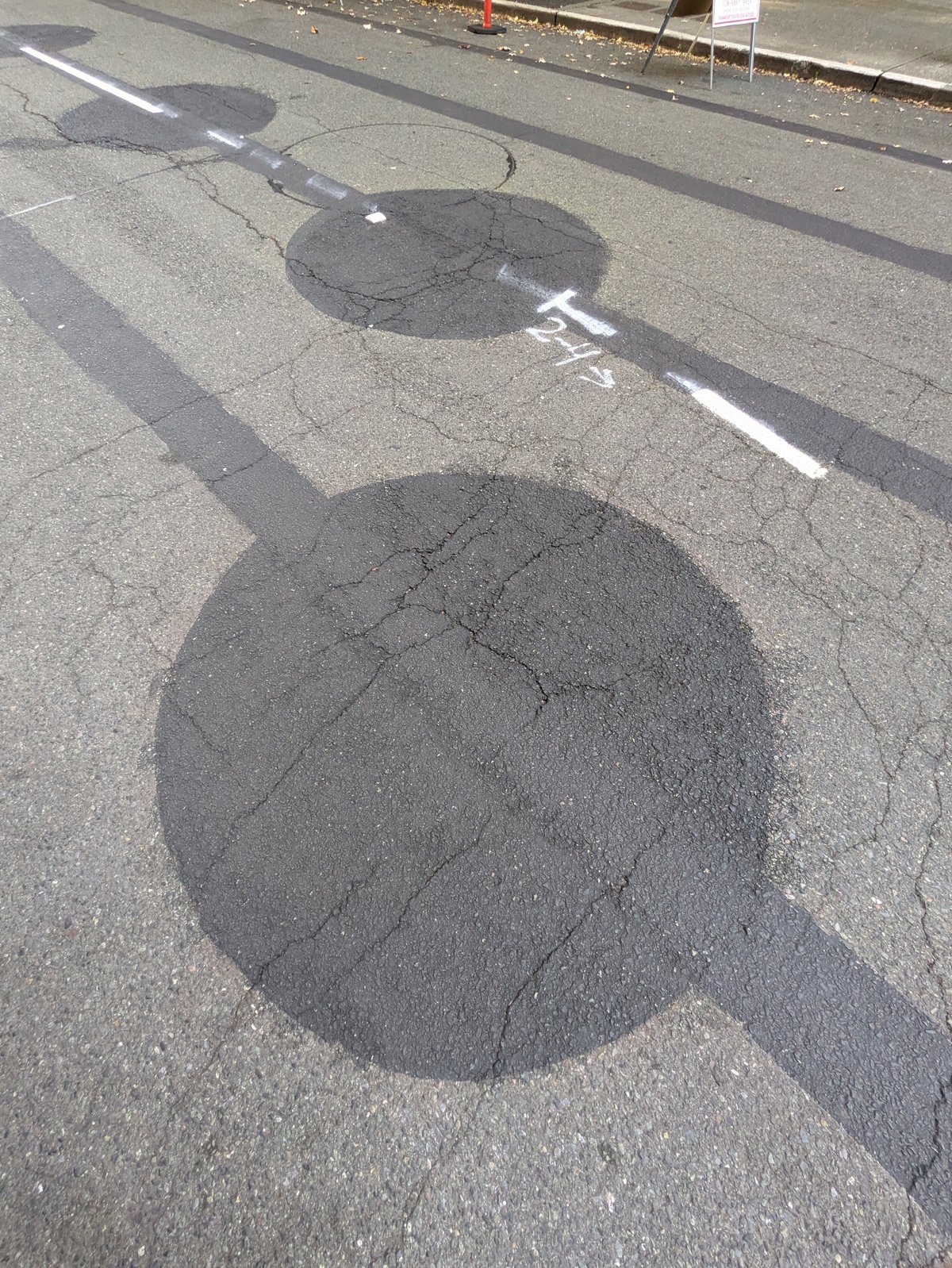
Disclosure: I worked at the convention center in 2023, in guest services, and the February presentation quoted here came to the Dispatch through a public records request.
Sources: The Seattle Times, October 12, 2026; SCC PFD board presentation, February 24, 2026, obtained by public records request; C-STAR design documents, Graham Baba Architects; Resolution 2026-04; RCW 39.34.030 and 39.34.040; WSCC PFD Bylaws (Resolution 2024-08), Section 3.4.1; Board Policy 10, Booking Policy (revised April 22, 2025); KING 5, October 8, 2026; C-STAR update, SCC PFD board meeting, August 25, 2026 (Seattle Safe Place designation slide, photographed by the author). Every date and quote above can be checked against them; the restroom count and the desk details are my own observations.
Make a Take / Share a Take▾
Before you pass it on — what's your take?
Sharing a Dispatch piece is taking a position. Take a moment to say what yours is — it travels further, and better, for it.
What do you want to say about this? What struck you — and who needs to hear it?
We don't track clicks. If Make a Take was useful, let us know →
Not sure what to say? Let your own AI help you draft it →
The prompt asks your AI to draft a note in your voice from what the article and its sources actually support — and to push back if you overclaim. Your conversation stays in your AI; nothing is sent to the Dispatch.