Read this with your own AI▾
This piece was built with the help of AI, from public records — here's how. Read it back with your AI: choose how you want to read it, copy the prompt, and interrogate the article yourself.
Your conversation stays in your AI — nothing is sent to or stored by the Dispatch. The built-in grounding line keeps the answer tied to the Dispatch's own reporting, and asks your AI to flag — not invent — anything that needs more.
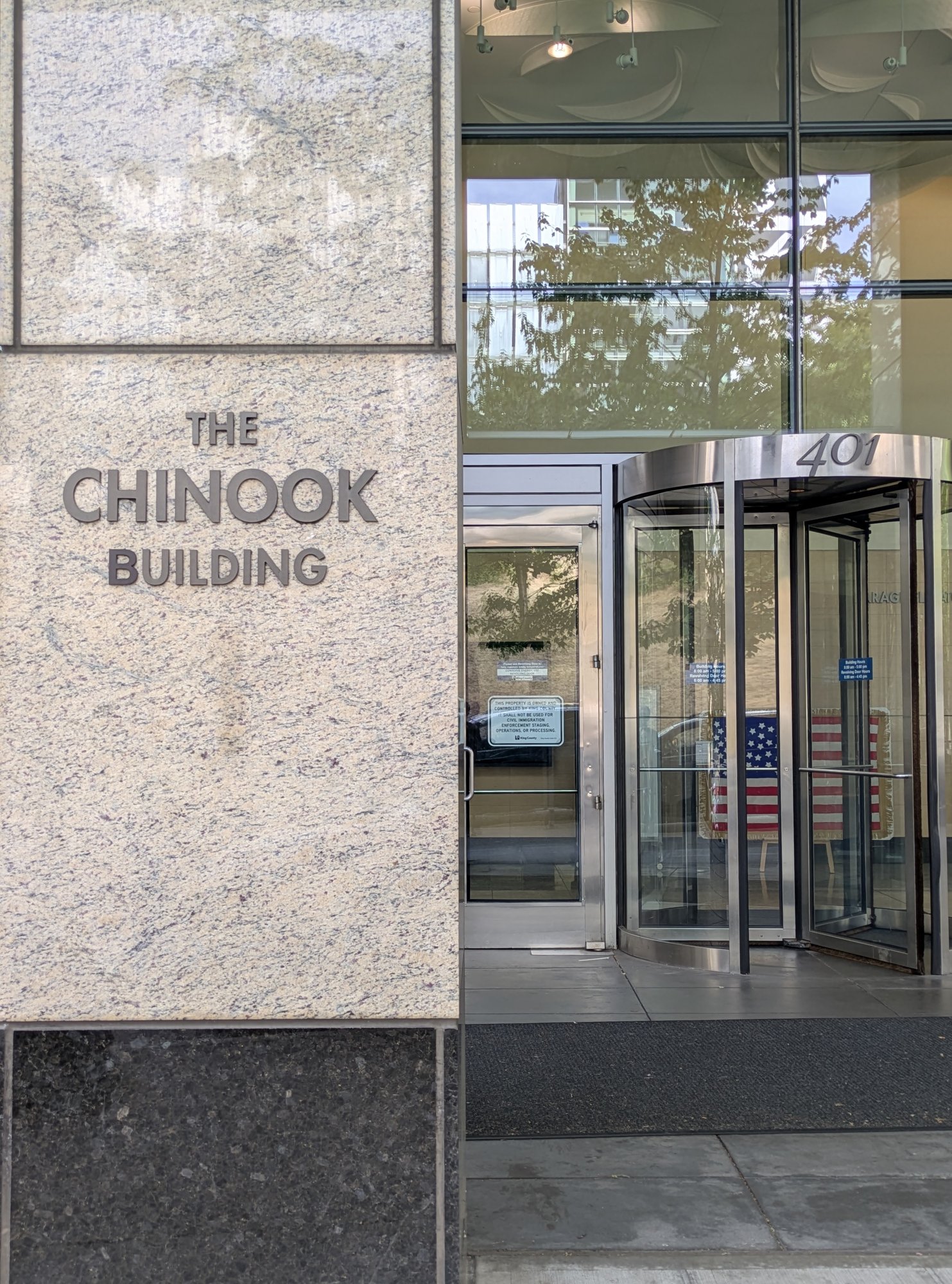
King County is building a public application process for its roughly fifty boards and commissions, the Executive's office says — a change that would end, at the Seattle Convention Center, a longstanding practice in which every nominee the County sent forward had been identified first by the Convention Center.
Asked whether the County posts board vacancies publicly, a spokesperson for the Executive's Office said it is "in the process of making this happen for every board and commission," modeled on the Governor's office, which publishes its openings monthly. Some King County bodies already recruit that way. The Washington State Convention Center Public Facilities District (the PFD), which governs the Seattle Convention Center, does not.
For the two County seats on the district's nine-member board, whose terms end today, the office said it is "considering the candidate put forward by the PFD." Asked whether it had weighed anyone the Convention Center did not propose, it said it has "also independently identified a number of individuals who would be good fits" — the first indication, in the records the County has produced, of County-generated names for this board.
Describing the process this administration inherited, the spokesperson said "each board/commission identifies, recruits, and nominates individuals to serve on their boards," which the Executive's office then vets and approves or rejects, running each recommendation past its Community Service and Response team before senior leadership decides. County records obtained under the Public Records Act show what that has meant at the Convention Center. Across the twelve years of correspondence the County produced, every nominee the County sent to the County Council was identified first by the Center: by its CEO, its chairman, or its board, in writing and on County forms, in one instance before an application for the seat existed. No other name appears in the file.
The process has yielded qualified and talented people who capably serve a public institution for a per-meeting stipend, and their accomplishments are real and substantive. The critique of the process is that a board left to recruit its own successors tends to concentrate its experience in a single industry. State law requires two of the nine members to represent the lodging industry; by the district's own board biographies, five of the current board carry a hospitality background, four of them from the hotel business itself. For a district whose operations run straight into the rest of the city — the streets around it, the retailers and restaurants whose business moves with its calendar, the neighborhoods that host it — that is a narrow band of experience to govern from.
A board knows what it needs — someone who can read a construction schedule, a bond covenant, or a catering contract, for example — but that does not mean it should be solely responsible for filling its own seats. The board's part is to identify its functional gaps, giving the appointing offices — the Governor, the County Executive and the Mayor — the information they need to find the ideal candidates for those seats. A public application process lets more people raise a hand — and a wider flow of candidates widens the bench. It would mean more rotation in the chair, which has changed hands once since 1982, and more people prepared to take it. It would mean more of the board able to see where conventions, hospitality and the rest of the economy actually meet.
Those gains land first at the district itself. Yet its website carries no instructions anywhere on how to apply for a seat, and no link to the application pages the Governor, the County and the City each maintain. A review by this publication earlier this month, measuring the site against seven peer convention-center boards, found it the only one in the group offering the public no way to attend a meeting remotely; public comment is taken in person, at the start of a weekday-afternoon meeting. The Center did not respond to questions sent July 27 for this story, among them whether any application or expression-of-interest process is open to people the board has not approached. A district that welcomed residents wanting to know how it is governed, and gave them something to learn from, would be building a feeder system for its own board.
On July 1 the Dispatch urged readers to apply for the five seats opening on that board — the County's two among them — noting that the board does not choose its own members. That was true and it still is: the seats belong to the Governor, the County Executive and the Mayor, and nothing has ever stopped anyone from applying. In practice the board recommends the members to be chosen by the executives, and until now no other name has reached the County.
Why the seats are split three ways
When the Legislature created the convention center in 1982, the Governor appointed all nine board members and named Jim Ellis the first chairman. A board built around the man who delivered Forward Thrust and the Lake Washington cleanup did not need much oversight machinery, and did not get much. The check was personal, and visible.
In 2010 the Legislature replaced it. Senate Bill 6889 converted the center into a public facilities district, took it out from under state legislative oversight, and split the appointment power three ways — three seats each to the Governor, the County Executive, and the Mayor. Under three separate appointing authorities, no single actor — the board included — controls who sits on it. That structure went in. An appointing office recruiting candidates of its own, as the County now says it intends, would be the structure's first recorded use.
Self-nominating boards are ordinary; most nonprofits work that way. But this is no ordinary board. It controls fourteen acres at the center of downtown Seattle; unlike the stadiums, the libraries and the parks, it has never appeared on a ballot — not in 1982, not in 2010; and, the appointment process aside, its operations run independently of city, county and state government. Appointment is the only check on who sits on it.
What happens now
Five of the board's nine terms expire at the end of today. One seat is already filled: the Mayor appointed Zahoor Ahmed to a term that begins tomorrow. Four remain open — two the County's, one the Governor's, one the Mayor's.
For the County's two, the spokesperson said the incumbents "will likely hold over a little" and estimated transmittal to the County Council, which confirms County appointments, "by the end of August at the latest." A nomination for one of the two — the candidate put forward by the Center — is pending. Those two seats are the first test of whether the process the County says it is building reaches the board of a district that closed 2024 owing $1.8 billion on its bonds.
The other two — the Governor's and the Mayor's — should be open to people the board has not recruited. Serving on one is civic engagement of an underrated kind, a little like jury duty with better catering: a few meetings, a modest stipend, and a board that cannot act without a quorum, which makes showing up an essential part of the job. The Governor takes applications at governor.wa.gov, King County at kingcounty.gov/boards-commissions, the City at seattle.gov/boards-and-commissions.
Sources: King County quotations are from written responses provided July 29, 2026, attributable to a spokesperson for the Executive's Office. Correspondence is from records produced under Public Records Act request G016240-050626, installments 01 and 02, covering 2014 to May 2026. The website comparison is from this publication's July 1, 2026 review of eight convention-center board sites — the district's and seven peers'. Board composition is from the district's governance page (seattlecc.com/governance), accessed July 30, 2026. RCW 36.100 governs public facilities districts; 2010 Senate Bill 6889 restructured this one. Every count and quotation in this piece can be checked against those documents.
Make a Take / Share a Take▾
Before you pass it on — what's your take?
Sharing a Dispatch piece is taking a position. Take a moment to say what yours is — it travels further, and better, for it.
What do you want to say about this? What struck you — and who needs to hear it?
We don't track clicks. If Make a Take was useful, let us know →
Not sure what to say? Let your own AI help you draft it →
The prompt asks your AI to draft a note in your voice from what the article and its sources actually support — and to push back if you overclaim. Your conversation stays in your AI; nothing is sent to the Dispatch.