Read this with your own AI▾
This piece was built with the help of AI, from public records — here's how. Read it back with your AI: choose how you want to read it, copy the prompt, and interrogate the article yourself.
Your conversation stays in your AI — nothing is sent to or stored by the Dispatch. The built-in grounding line keeps the answer tied to the Dispatch's own reporting, and asks your AI to flag — not invent — anything that needs more.
A public institution downtown spends about $100 million a year of public money, carries $1.9 billion in debt, and answers to a board no one elected: the Washington State Convention Center, run by a public facilities district that does business as the Seattle Convention Center. Its own numbers point to a hard 2030 — the year its debt payments nearly double, with no published plan to cover them. In the meantime, it has built a facility at 810 Pike it won't explain and begun a campus plan that reaches onto land it doesn't own, largely out of public view. Here's what the records show, and why it's your business.
What it actually costs
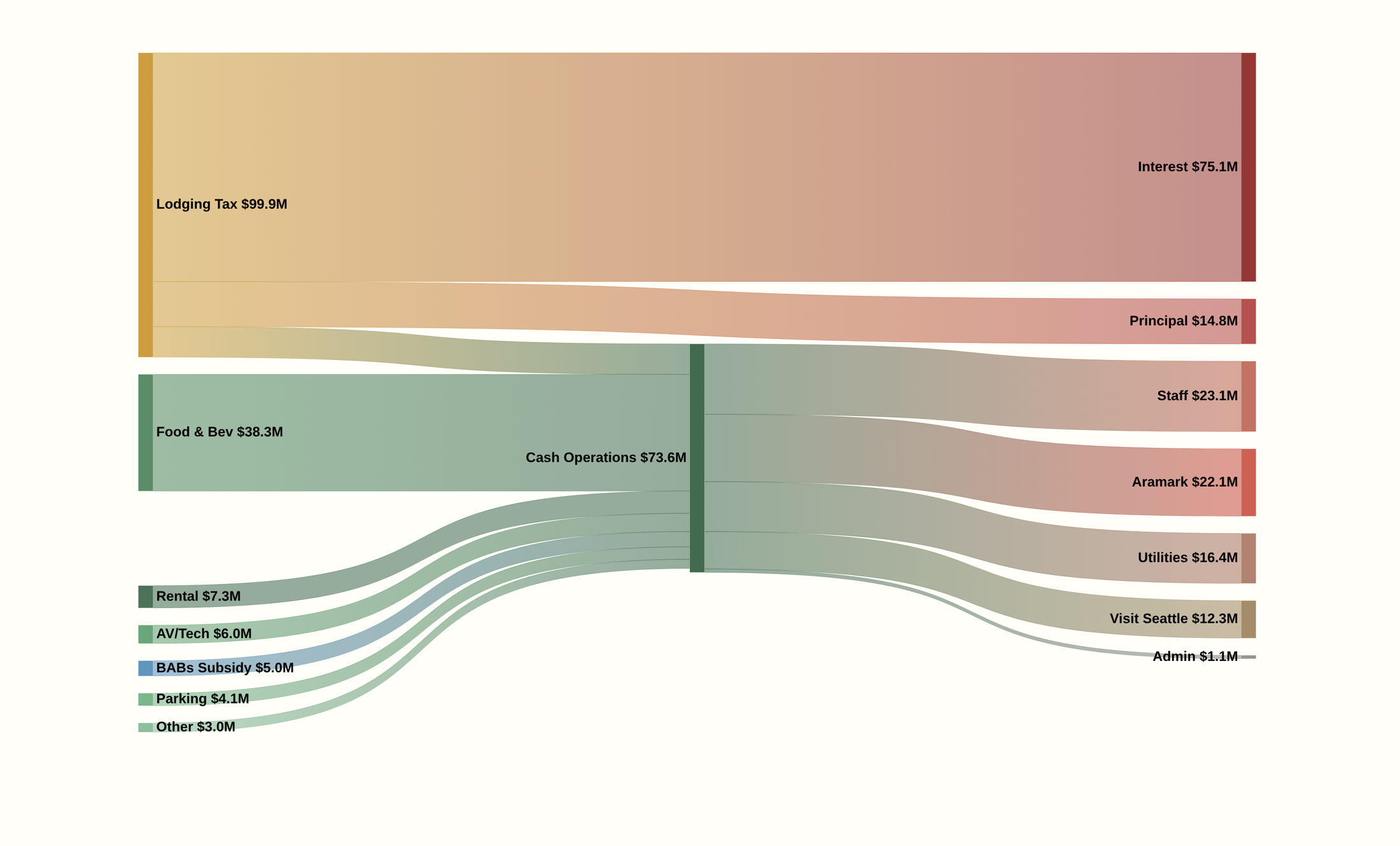
Where does the money go? Seven percent of every Seattle hotel bill flows to the convention center — about $100 million a year. Most of it never runs the building. It services debt.
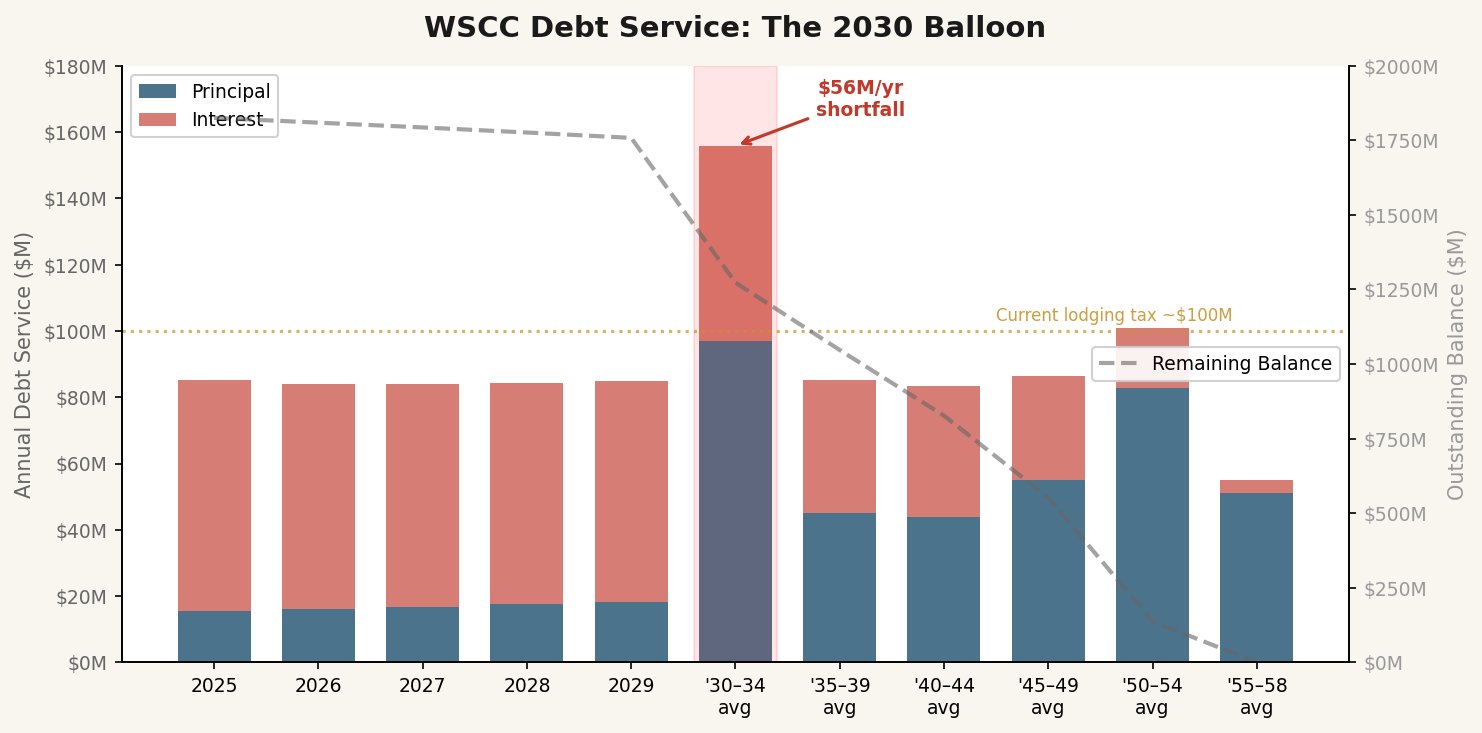
The building carries about $1.9 billion in bonds, and debt service already eats most of the lodging tax. It's about to get worse: starting in 2030 the annual payment nearly doubles — a balloon written into the original financing — while the tax meant to cover it has come in about 42% below the forecast the bonds were sold on. Much of that gap opened when COVID gutted travel in 2020; collections have recovered since, but not to the trajectory the bonds assumed — and the 2030 balloon is indifferent to the cause.
Convention centers aren't built to turn a profit. The theory is that visitors fill hotels and restaurants, and that activity justifies the cost. It's a legitimate model, and most big cities use some version of it — though the headline "economic impact" numbers tend to run well above reality, which I traced through the multiplier math in Shadows on the Wall. But the legitimacy of any model depends on who is watching it.
So before I tell you who watches this one, a game — play along.
Who's watching
The center is governed by an independent public corporation created by state law — not a city department, not a county department. A nine-member board, appointed by the Governor, the King County Executive, and the Mayor of Seattle.
The chair, Frank Finneran, has sat on the board since 1988 and chaired it since 2003 — more than two decades — without a public election and, in a statute that sets no term limits, with nothing forcing turnover. Before he chaired it, he led the statewide hotel-and-restaurant association, whose members pay the very lodging tax that funds the district.
Over the years the board narrowed toward the industry it serves, by quiet reappointment — with no seat for the people who live beside the building or the public that pays for it. The board also approves, year after year, a marketing contract with Visit Seattle worth more than $10 million, with no public competitive process.
The same board also authorized the institution's two newest projects without a public comment period and without city council involvement.
What's happening at 810 Pike
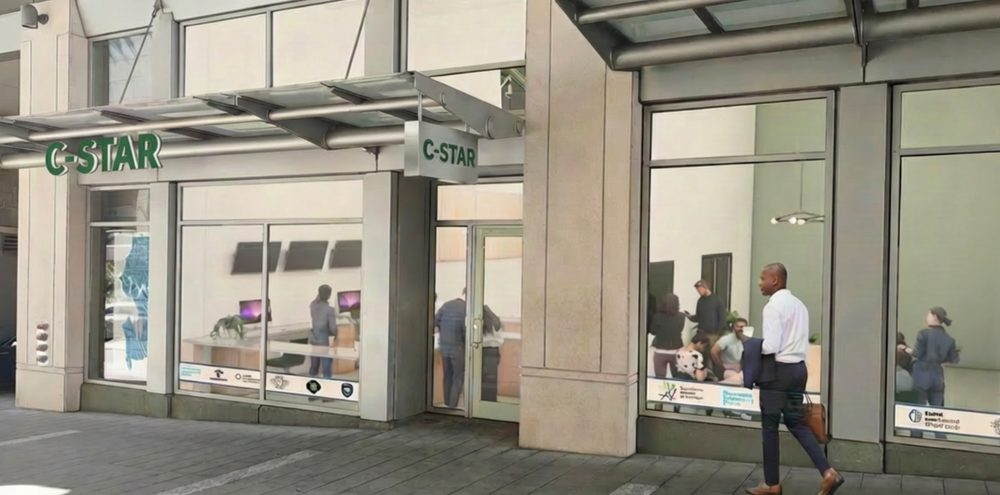
For months, the district planned and built a new facility inside the Arch at 810 Pike Street — "C-STAR" — a 24/7, soundproofed, card-access space whose "external end users" the documents never name, paired with a new emergency-management director hired on federal NIMS/ICS/FEMA credentials, not the kind you need to run a trade show. Construction is finished, and management still hasn't told the public what it's for.
My immediate concern was that the federal credentials plus the lack of transparency meant the space could be used for immigration enforcement — and there's no sanctuary policy in the building, unlike the county, the city, the courts, and the port. I confirmed that the convention center has no sanctuary policy. Then I got a look at the plans, which show a much more benign view of the intended use of the space. Why they're tight-lipped about something meant for public safety, I have no idea.
The sanctuary gap
The lodging tax that built this place is collected from hotels, and those hotels run on immigrant labor — the workers whose work generates the revenue may have no clear protection on the property their taxes maintain. Whether King County's executive order even reaches an independent district like this one is an open legal question I've put to the county, with no answer yet. The fix is small and specific: the board can adopt a written policy at a single meeting.
The longer game
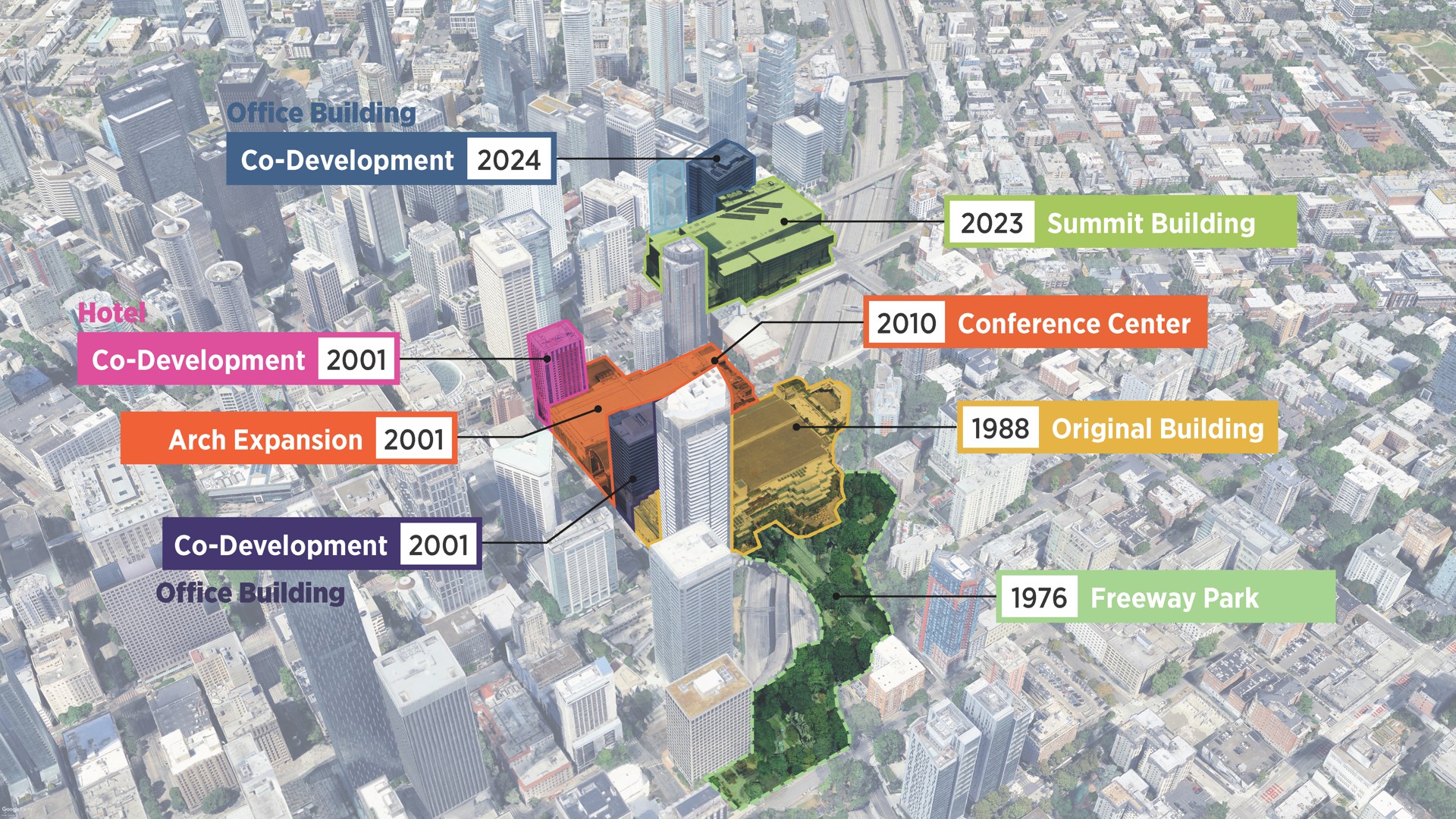
In 2025 the district awarded a seven-year contract — running to 2032 — for a master plan covering fourteen acres downtown, between Pike Street and Freeway Park, alongside the I-5 lid corridor where park advocates have worked for years. Before the award, the scope was quietly broadened to direct the contractor to study "vacant or underdeveloped land within, adjacent to, or nearby the campus."
Nearby the campus — land the district does not own. The enabling statute, RCW 36.100, restricts lodging-tax revenue to operating the public facilities it authorizes, not to scouting development on parcels the district doesn't hold. Whether that broadened scope is an authorized use of restricted public funds is a real legal question. The plan is already underway. No public comment period has been announced.
Why it's your business
Strip away the acronyms and it comes down to this: about $100 million a year of public money, spent by a board no one elected, on commitments that will outlast the people who made them — a debt payment set to nearly double in 2030 with no published plan to cover it, a facility opened without notice, a seven-year plan eyeing land around the neighborhood. As a Seattle resident, you're downstream of that 2030 math; when it gets hard, the realistic options are to refinance or to ask the public to cover it. As a neighbor, it's your blocks being planned, and the workers who fund the building with no promise of protection on it. None of this requires believing anyone acted in bad faith — only noticing that an institution this big is deciding things this consequential with almost no one watching.
What can be done
Public records. Washington is a strong public-records state, and the district is a public agency. Any federal agreements behind C-STAR are public records; so are the board minutes authorizing these projects. I've filed requests with the center, the Governor's office, King County, and the City. The answers will confirm or defuse the concerns either way.
The appointing authorities. The Governor, the County Executive, and the Mayor each appoint board members. Any of them can ask, today, who C-STAR's external users are — no lawsuit required. One letter changes the board's calculus.
The legislature. RCW 36.100 can be amended: a sanctuary condition, public-engagement requirements for major planning contracts, term limits for board members. A sympathetic legislator can ask the Office of Code Reviser whether the master plan's "nearby parcels" mandate exceeds the district's authority — and the answer becomes a public record.
Five of the nine board seats expire July 30 — days after the World Cup final. The Governor, the County Executive, and the Mayor each control expiring seats; together they can reconstitute the board without reappointing a single incumbent. The window to shape those appointments is now, before the nominations are made. A board seated in August inherits C-STAR, the seven-year contract, and the new senior hire as settled facts — and unwinding a settled fact takes will against momentum.
Build a briefing. Pick the office you'd write to — the Governor, the County Executive, the Mayor, a legislator — and the Dispatch's briefing tool hands you a sourced one-pager for exactly that, plus a prompt for your own AI. Every claim traces to a public record.
A public institution is spending about $100 million a year of money collected in your city, governed by a board you were never asked to vote on. Someone should be watching.
The figures are 2024 audited actuals; every record cited is public.
Disclosure: I've argued elsewhere that the Arch should run as a year-round public commons under Seattle Center while the district keeps the Summit for conventions — see the Commons. The facts here don't depend on that position, but you should know I hold it.
Ivan Schneider is the founding editor of The Convention City Dispatch.
Make a Take / Share a Take▾
Before you pass it on — what's your take?
Sharing a Dispatch piece is taking a position. Take a moment to say what yours is — it travels further, and better, for it.
What do you want to say about this? What struck you — and who needs to hear it?
We don't track clicks. If Make a Take was useful, let us know →
Not sure what to say? Let your own AI help you draft it →
The prompt asks your AI to draft a note in your voice from what the article and its sources actually support — and to push back if you overclaim. Your conversation stays in your AI; nothing is sent to the Dispatch.