Read this with your own AI▾
This piece was built with the help of AI, from public records — here's how. Read it back with your AI: choose how you want to read it, copy the prompt, and interrogate the article yourself.
Your conversation stays in your AI — nothing is sent to or stored by the Dispatch. The built-in grounding line keeps the answer tied to the Dispatch's own reporting, and asks your AI to flag — not invent — anything that needs more.
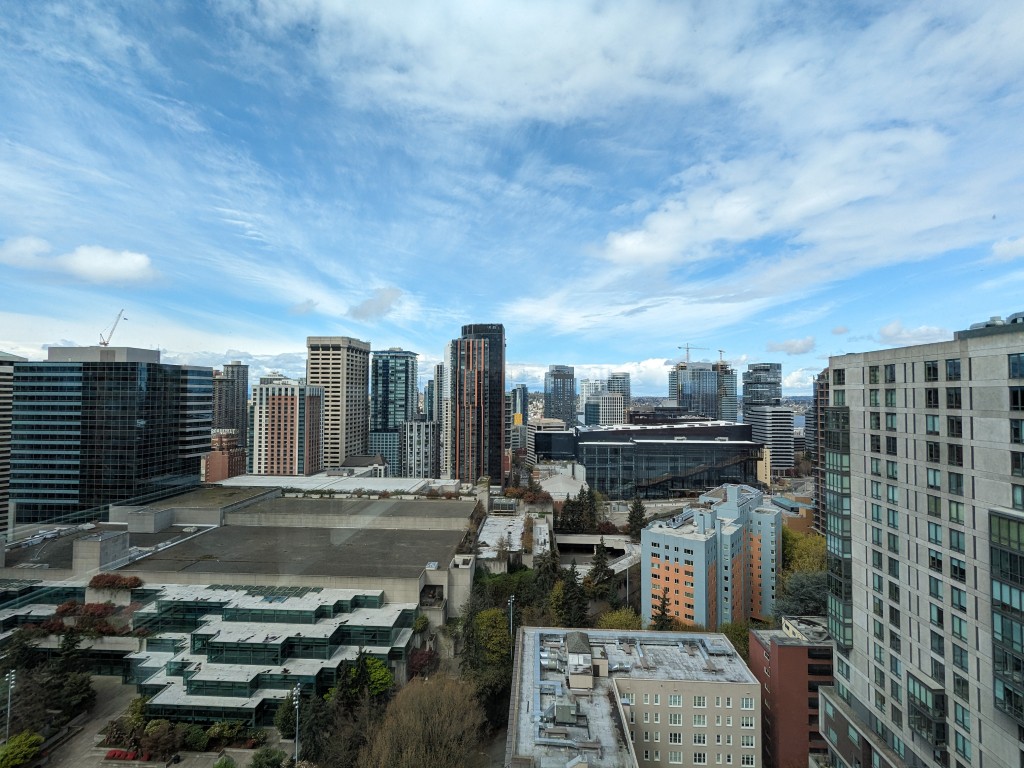
Welcome. Convention City Seattle is what I call the neighborhood around the convention center — the blocks at the top of Pike and Pine where downtown, First Hill and Capitol Hill meet over the freeway. Nobody else has named it yet.
I'm Ivan Schneider. I worked at the convention center in 2023, as an on-call attendant and guest services lead, and after I left I built digital trail maps for visitors to the Summit. In February a Seattle Times article on the Center's finances — reserves down from more than $200 million to about $25 million, the CEO calling the situation "fragile" — gave me an idea: have the City of Seattle buy the Arch, the original 1988 building on Pike, from the public facilities district that owns it, and let Seattle Center run it as a year-round public commons, with the convention center keeping a leaseback for the days it still needs. I wrote a LinkedIn post, then a site making the case, and the Dispatch followed. In April The Urbanist ran the case as an op-ed — the personal story behind the project, the captive food operation, and where Seattle stood against the other cities I'd scored — and it carries the correction I printed when the Center's booking records showed I'd called the Arch dark on the wrong numbers. Before any of that my career was in databases and then writing about technology in financial services.
I don't pretend to be neutral. I wrote that proposal, so this is advocacy journalism, a point of view openly held. What I can promise is that the reporting shows its sources and corrects its mistakes in public. The longer version is on the about page.
Since February I've published forty-seven pieces about who runs the campus, where the money goes, what the buildings do on the days there's no convention, and what they could be. Every piece is sourced to public records, every number can be redone from them, and the ones I got wrong say so at the bottom of the piece.
You don't have to read all of it, and you don't have to start at the beginning.
New here? The nouns first
The Seattle Convention Center is a campus at the top of Pike and Pine: the Arch, opened 1988, a separate wing across 8th Avenue added in 2010, and the Summit, opened 2023 a block northeast and connected to neither. It is run by a public facilities district — a municipal corporation, not a city department and not a private company. Nine directors govern it, three appointed by the Governor, three by the County Executive, three by the Mayor. How one seat actually gets filled.
The 7% lodging tax is a dedicated levy on every hotel room in the city, separate from and on top of the ordinary sales tax. It raised $93,491,443 in 2024, the district keeps all of it, and it services $1.8 billion of bonds. What that buys.
Visit Seattle is the region's destination marketing organization — a 501(c)(6) nonprofit, the convention-and-visitors bureau that every large city has. Not a city department, and not a lobbying group. Its own 2019 budget, presented to the district's board, showed 52.3% of its revenue coming from the convention center and 31.7% from the downtown hotel assessment.
The downtown hotel assessment is about 2.3% of the room rate, and it is not a tax: downtown hotels levy it on themselves under state business-improvement-area law, the City collects it, and it goes to Visit Seattle.
The contract runs between the district and Visit Seattle — not the City. Twelve million dollars in 2026, up from $7.5 million in 2022, under an arrangement roughly thirty-seven years old, with no competitive process on record and a standing exemption from the district's own procurement rules. Both Sides of the Table.
The DSA and the WHA are trade associations. The Downtown Seattle Association represents downtown businesses; the Washington Hospitality Association is the 2016 merger of the state's restaurant and lodging associations. People move between their boards and the district's. Who's Watching the Numbers?
Start here
- You've never read this desk — The Temple at the Summit, which says: a toll of nearly a tenth on every downtown hotel-room dollar funds a temple most visitors never enter, run by a board chaired from the innkeepers' guild. One piece and you'll know where you are; the map of everything else is inside it.
- You live here and you want the money story — Summit 2030: Big Balloon Bailout, which says: debt service nearly doubles in 2030, and covering it would take 9% hotel-revenue growth every year for six years. Then Shadows on the Wall on the profit claim — or skip me entirely and read the ledger yourself.
- You work at the Center, or for someone who does — the whole file is on this page, and the two pieces that say what would settle it are Who's Watching the Numbers? and The Punch List, where every ask carries the test that closes it. If I got something wrong, tell me — corrections run at the foot of the piece they correct.
- You study local government — Both Sides of the Table, which says: thirty-seven years of a lump-sum contract with no competitive process on record. Then The Bench on how one seat actually gets filled, and the Convention City Almanac for eighteen convention boards scored city by city.
Or don't read at all
- Play it — Heads in Beds, the booking-calendar game: fill the rooms, chase the metric, then open the doors.
- Walk it — the Pike & Pine tours on the Commons, thirty-three stops from Plymouth Pillars to the Market and back.
- Ask it — open the panel at the top of this page, pick who you are and what you want to know, and hand the prompt to your own AI. Nothing you ask goes to us.
The Seattle Archipelago — the series, in order
- The Temple at the Summit — the toll, the four offices, the map.
- Both Sides of the Table, which says: a lump-sum payment from the public campus to the private nonprofit that markets it, renewed across thirty-seven years with no competitive process on record, and graded by people who sit on both sides of the table.
- We Built This City, which says: the Downtown Seattle Association is nearly seventy years old, heavier relative to its city than any downtown organization we surveyed, and politically fused in a way peer cities deliberately avoid.
- Set It Up So It Can't Be Swept, which says: the lesson the hospitality industry took from 2011 is that anything living inside a public budget can die there — and this is what it built on that lesson.
- Companion: Ready to ROB? — the state's new tourism-assessment board, being seated now.
- The Bench, which says: the mayor appointed a career hotel-finance executive who has chaired the marketing arm, the downtown coalition, and the hospitality lobby to the public board that governs the convention center.
- The Two Tolls, which says: a hotel guest and an Airbnb guest pay an identical tax stack on a Seattle night; only one of them ends up funding housing.
- Heads in Beds, which says: I've said my piece, and I'll say it again — but never the same way twice. The closer, and it launches the game.
News from the series: King County Says It Will Post Board Vacancies Publicly, which says: the County is building a public application process for its roughly fifty boards and commissions — a change that would end, at the convention center, a practice in which every nominee the County sent forward had been identified first by the Center.
Where the money goes
- Can the hotels cover the debt? — Summit 2030: Big Balloon Bailout, which says: debt service nearly doubles in 2030; to cover it, Seattle hotel revenue would need to grow 9% every year for six years straight.
- Is it profitable? — Shadows on the Wall, which says: the Center claims $1.4 million in profit following a $1.9 billion investment. Let's do the math.
- What does the empty lot cost? — Olive Branch, which says: a one-bedroom on Pike rents for $2,444 a month; the PFD pays $2,426 a year to own the empty lot across from it.
- Who does public finance on the board? — Who's Watching the Numbers?, which says: nine people govern the Center and not one does public finance for a living — one of three fixable gaps.
- What does the whole thing cost? — Your Convention Center, by the Numbers, which says: what a downtown public institution actually costs, who watches it, and the facility at 810 Pike.
- Where do the two tolls go? — The Two Tolls and Both Sides of the Table, above.
- The ledger itself: the financials and their source walkthrough, on the Commons.
Who runs it — the board
- How many seats, and when do they turn? — Convention Center Board Majority Up for Grabs as Six Seats Open This Year, which says: the Governor filled an empty seat with the Roundtable's CEO; five other seats expire July 30.
- Who should sit there? — Help Wanted: Seeking PFD Board Members, which says: the board is overweight on lodging and underweight on nearly everything else, and the public can apply.
- Who got the seat? — The Bench, above.
- How do the seats actually get filled? — King County Says It Will Post Board Vacancies Publicly, above.
The building — how full is it, and what's planned
- Is it dark most of the year? — Fell on Black Days, which says: a utilization analysis from the Center's own records — 194 event days, 274 use days, and the street-facing wing that opened on 22 days. This is also the piece where the desk was corrected and said so.
- How does the food work? — Two Buildings, Two Kitchens, which says: how convention-center food works, and why it matters to the sidewalk.
- Can you find your way around it? — You Are Here (Approximately), which says: new wayfinding just dropped; follow at your own risk.
- What's the plan for the campus? — The Campus Master Plan: What's Been Decided, which says: three firms submitted three very different visions of what the campus is for, and the choice was made last August with no public hearing. Take the pick yourself.
- Best managed? — Magna Cum Laude, which says: the Center wants to host the city's graduations — and guess who earned the Best Managed award.
C-STAR and the sanctuary question
- What's behind the door? — What's Behind the Door at 810 Pike?, which says: a new public-safety facility opens inside the Center on June 1; it's called C-STAR; what else do we know?
- Should we worry? — Please Tell Me There's Nothing to Worry About, which says: it's all a big misunderstanding, right? I even made you a sign.
- Is there a sanctuary policy? — "No Such Policy Has Been Adopted", which says: the Center confirmed, in writing, that it has none — with the hub opening June 1.
- What does it look like? — C-STAR Will Open as a Storefront Safety Hub, which says: renderings obtained through a public-records request show a glass Pike Street storefront, designed with the police department, the DSA, and the city's CARE team at the table.
- How did it end? — Clean, Safe, Secure — and Coming Soon, which says: the hub is nearly open, and it turns out there was nothing to hide.
The street — Pike, Pine, and the corner
- Why did the Cheesecake Factory die? — The Cheesecake Paradox, which says: the visitor draw at the corner averages about 2,200 a day with a swing of 4,800; you can't staff a factory against that. Then Cheesecake Math, Revisited, which says: I rushed the numbers out for National Hot Dog Day, then did them properly, and the case got stronger.
- What's the neighborhood's plan? — State of Downtown 2031, which says: a neighborhood finds its spine.
- Whose park is that over the freeway? — Who Was Jim Ellis?, which says: fifty years ago on the Fourth of July, Seattle built the first park on a lid over an interstate, and it is named for a man who carried an extra sandwich to school.
- Who licensed the sidewalks? — Sidewalk Sale, which says: Seattle licensed twenty years of its public sidewalks to a Columbus billboard company; the neighborhoods that will host the kiosks were never asked. Then Sidewalk Salesmen, which says: here is the rest of the file — the conference, the no vote, the ordinance, and the lobbyist who chaired the host association.
- What's happening on Ninth Avenue? — A Car-Free Ninth Avenue, which says: the Center is closing 9th between Pike and Pine from July 28 through September 8, with night markets in August. And Convention City Calendar: August 2026 — the dates, no commentary.
The Commons — what the building could be
- What if it were ours? — The Big Tent, which says: our circus, our clowns, our tent.
- Who showed up for the World Cup? — The City's Living Room, which says: the crowds that packed the waterfront were local — which is exactly the argument for running the convention center as the region's living room, not a hotel-room machine.
- Where's the theater? — Let's Put On a Show, which says: the door to contemporary theater in Seattle is locked. Not a metaphor.
- Who's the neighbor with the long memory? — Thank You, Horizon House, which says: a full room on First Hill turned out to talk about the building next door — who runs it, where the money goes, and what to ask for before the next expansion.
- What does hospitality need? — You Can't Have Hospitality Without Hosts — a Labor Day dispatch.
Out on the town
- Pacific Place Activated for SEA 2026 Fan Zones, which says: the Sports Commission is turning Pacific Place into a stadium annex — and that reveals who does downtown activation.
- Fourth Friday: Downtown Art Walk, which says: one Friday a month, downtown finds its rhythm.
- Three Trails from Emerald City Comic Con, which says: 25,000 fans will pack the center; here's what's outside the doors.
- Sports Book, which says: who needs sports bars when we have the Arch?
- Game On — playing games at Sakura-Con. It's a Mountain Day, which says: eleven works of Pacific Northwest art just joined the city's collection of hidden gems.
How this desk works
- Why does an AI help write this, and how is that honest? — In Defense of Slop, which says: the contempt for AI slop is earned but aimed at the wrong thing; the question is whether the work punches up, is sourced one claim at a time, signed, checkable, and disclosed.
- When we were wrong — Fool in the Rain, the April 1 correction that started the sourcing discipline; Fell on Black Days and Cheesecake Math, Revisited, two more corrections in the open.
- The week in one page — DISPATCH: Week of April 27, 2026.
- Read any piece with your own AI — every article carries a "read this with your own AI" panel; Make a Take is the recipe.
- The wider map — the Convention City Almanac, eighteen convention boards scored city by city.
What we're asking for
- The Punch List — every ask, numbered and sourced, with the test that would settle it.
- Findings — every finding, one fact, one document — and the exhibits behind them.
This page is updated as pieces publish. Every claim above is the linked piece's own; corrections live at the foot of the piece they correct.
Make a Take / Share a Take▾
Before you pass it on — what's your take?
Sharing a Dispatch piece is taking a position. Take a moment to say what yours is — it travels further, and better, for it.
What do you want to say about this? What struck you — and who needs to hear it?
We don't track clicks. If Make a Take was useful, let us know →
Not sure what to say? Let your own AI help you draft it →
The prompt asks your AI to draft a note in your voice from what the article and its sources actually support — and to push back if you overclaim. Your conversation stays in your AI; nothing is sent to the Dispatch.